How to Encourage Early Language Development in Babies
A baby’s ability to communicate begins long before their first word. From coos and babbles to gestures and early phrases, language grows through consistent interaction, connection, and repetition.
The good news? You don’t need special tools — just everyday moments and responsive engagement.
Strong early language development supports:
- Cognitive growth
- Social and emotional development
- Future reading ability
- Problem-solving and memory
- Confidence expressing needs
The first three years are a remarkable window for building these foundations.
Narrate what you’re doing — feeding, changing, playing, walking outside.
Why it works: Babies map sounds to meaning long before they speak.
Try this:
- “We’re putting on your socks. One sock… two socks!”
- Use slow, expressive speech so they can follow your tone.
When your baby coos, babbles, or gestures, respond like it’s a conversation.
This builds:
- Turn-taking skills
- Social awareness
- Early communication patterns
Even if they’re just babbling, reply warmly:
“Oh really? Tell me more!”
Reading exposes babies to richer vocabulary, rhythms, and storytelling.
Tips:
- Choose high-contrast or board books early on
- Let them turn pages
- Point to images and name objects
Even newborns benefit from the sound of your voice.
Music strengthens memory pathways and helps babies learn speech patterns.
Try:
- Nursery rhymes
- Songs with hand motions (“Itsy Bitsy Spider”)
- Simple, repetitive phrases
- Clapping rhythms
Babies love predictability — repetition builds understanding.
When your baby looks at something, label it.
Examples:
- “You see the dog! Dog!”
- “Blue ball! Let’s roll the ball.”
Follow their lead, not yours — their interests accelerate learning.
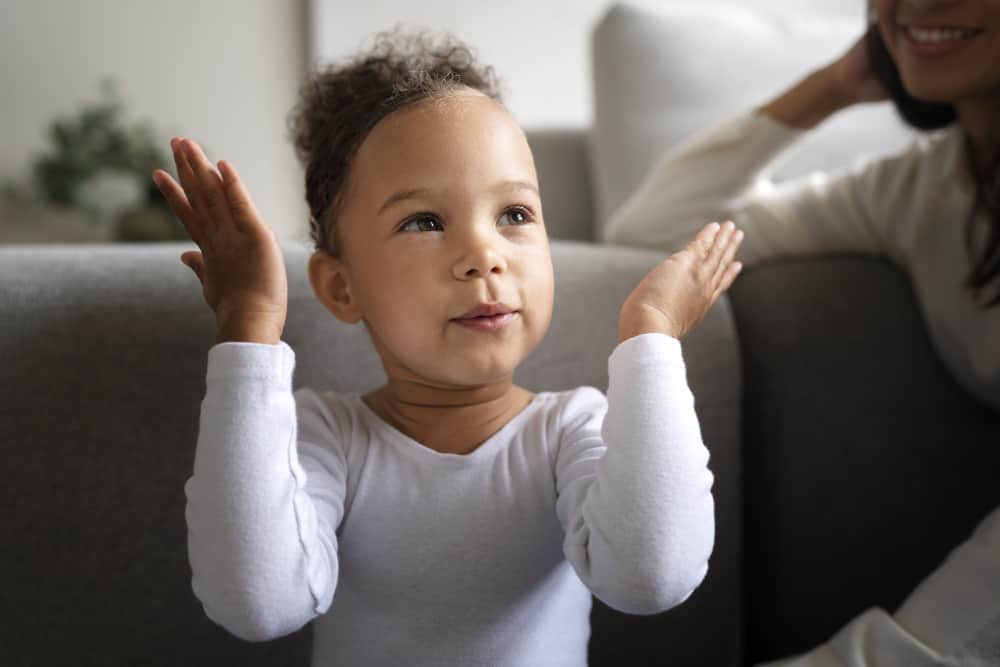
Gestures like waving, pointing, and clapping come before speaking.
You can model them:
- “Bye-bye!” (while waving)
- “All done!” (hands open)
- “More?” (tapping fingertips)
Babies who use early gestures tend to develop stronger vocabulary later.
The brain learns language best from real interactions, not passive sound.
Reduce:
- TV playing in the background
- Loud or constant noise
- Screen exposure (not recommended under age 2)
Silence + connection = faster learning.
Talk to your pediatrician if you notice:
- No babbling by 9–10 months
- No gestures by 12 months
- No words by 15–18 months
- Loss of previously gained skills
- Little interest in voices or sound
Early intervention makes a big difference — never hesitate to ask.
Encouraging language doesn’t require structured lessons — just warm, responsive communication woven into everyday moments.
Your voice, your expressions, and your presence are powerful tools that transform early babbles into confident communication.
Explore more family milestones in our Family & Parenting Articles or see how your baby’s growth compares using our Growth Chart Calculator.