
Tips for Introducing Solid Foods

Starting solids is an exciting milestone for both babies and parents. Discover when to begin, what first foods to try, and how to keep mealtimes safe and enjoyable.

Published Oct 8, 20252 min read
Baby tasting mashed avocado with a spoon for the first time

Image: Designed by Freepik

Tips for Introducing Solid Foods

Your baby’s first bites mark a big step in growth and discovery! Most babies are ready to start solid foods around 6 months, when their digestive systems and motor skills have developed enough for safe eating.

The goal is to explore flavors and textures — not replace milk or formula just yet.


Signs Your Baby Is Ready for Solids

Readiness SignWhat It Looks Like
Can sit up with minimal supportGood head and neck control
Shows interest in your foodWatches or reaches for your meals
Opens mouth for a spoonNo longer pushes food out with the tongue
Doubled birth weightUsually around 6 months old
Remember

Starting solids too early (before 4 months) or too late (after 7 months) may make transitions harder. Around 6 months is the sweet spot for most babies.


First Foods to Try

  1. Iron-rich foods — baby cereal, pureed meats, lentils
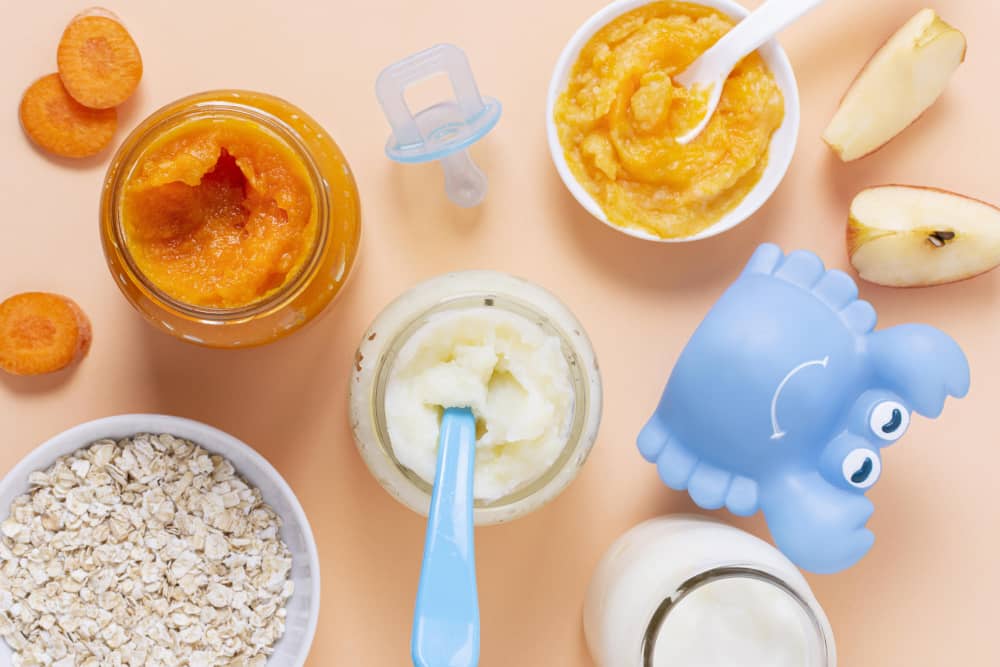
  2. Soft fruits and veggies — avocado, banana, sweet potato, carrots
  3. Single-ingredient purees — introduce one new food every 3–5 days
  4. Small portions — start with 1–2 teaspoons once a day

How to Introduce Solids Safely

  • Always supervise meals — babies should be upright and attentive.
  • Avoid honey before 12 months (risk of botulism).
  • Skip hard, round, or sticky foods that pose choking risks.
  • Offer water in small sips with meals.
  • Keep feeding sessions positive — no pressure, just exploration.
Pro tip

Let your baby play with food! Messy mealtime helps them learn textures and develop fine motor skills.


Common Feeding Approaches

MethodDescriptionKey Benefits
Traditional pureesSpoon-fed, smooth texturesControlled introduction of flavors
Baby-led weaning (BLW)Self-feeding soft finger foodsEncourages independence and self-regulation
Hybrid approachMix of both methodsFlexible and responsive to baby’s cues

Watch for Possible Allergies

Introduce common allergens (like eggs, peanut, dairy) one at a time, in small amounts, and during the day — so you can observe reactions safely.

If you notice hives, swelling, vomiting, or trouble breathing, seek medical help immediately.


Final Thoughts

Introducing solids should be fun, relaxed, and curiosity-driven. Every baby explores food differently — your patience and encouragement help set the stage for a lifetime of healthy eating.

Read next: How to Soothe a Colicky Baby or explore our Family & Parenting Guides for more first-year milestones.